
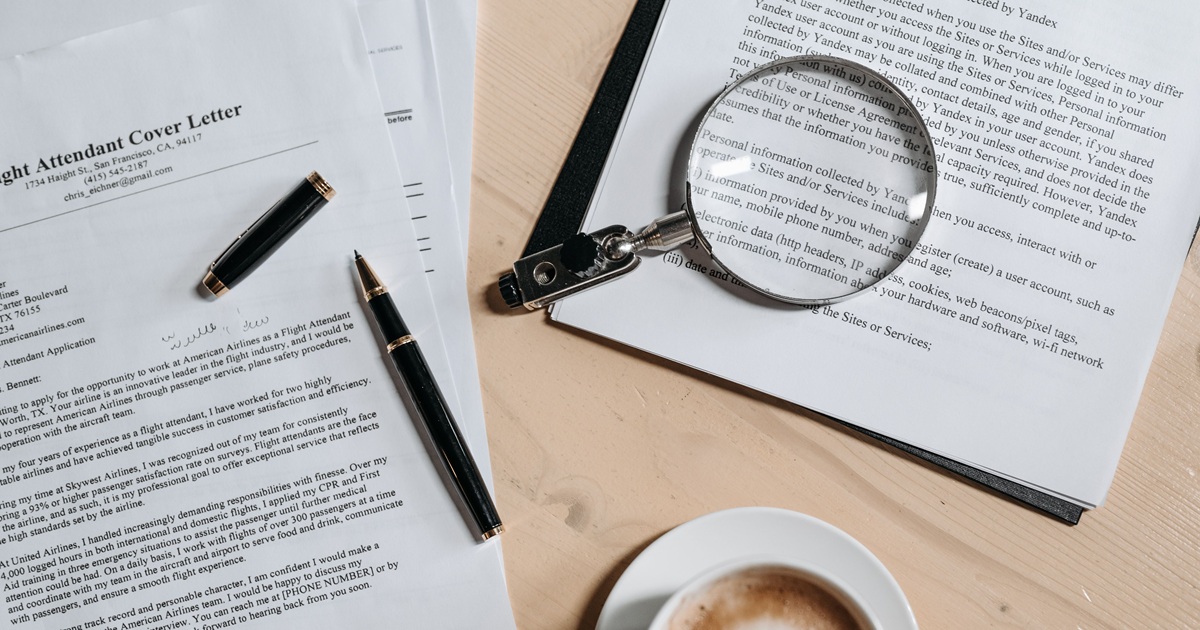
Does Anyone Actually Read Cover Letters in 2026?
Short answer: sometimes, and it depends more on the situation than most advice admits.
Cover letters are one of the most polarizing topics in job searching — some people swear they never write them and still get interviews; others insist a strong one made the difference. Both are probably true, just in different contexts. Here’s how to figure out which situation you’re in, so you’re not wasting effort where it won’t matter, or skipping it where it actually would.
When cover letters are more likely to be read
Smaller companies and startups. At a company with a lean hiring process — no dedicated recruiting team screening hundreds of applicants through an ATS — there’s a real chance a hiring manager or founder personally opens every application, cover letter included. The smaller the company, the more likely a human reads everything you send.
When you have a referral. If someone inside the company is passing your resume along directly, a short note explaining your interest often travels with it, or gets read by whoever received the referral. This isn’t quite the same as a formal cover letter, but the same “explain your interest specifically” logic applies.
When you’re making a non-obvious case. If your resume alone doesn’t clearly explain why you’re a fit — a career changer moving into data from a different field, someone with a gap, or someone applying to a role slightly outside their recent title — a cover letter is often the only place you get to make that connection explicit before a recruiter decides whether to keep reading.
Competitive, lower-volume roles. For highly sought-after positions at well-known companies with a smaller applicant pool than you’d expect (niche technical specialties, for example), a well-written letter can be a genuine differentiator precisely because most other applicants won’t bother.
When they’re much less likely to matter
Large-scale corporate hiring pipelines. At companies processing hundreds or thousands of applications per posting through an ATS, cover letters are frequently not even parsed, let alone read by the recruiter — many systems don’t display them prominently, and recruiters under volume pressure often skip straight to the resume.
When the job posting doesn’t request one. If a posting says “resume only” or doesn’t mention a cover letter at all, spending hours on one is usually a poor use of your time relative to other things you could be doing — like tailoring your resume more precisely, or reaching out directly to someone at the company.
How to triage your effort
Given this, a reasonable system: write a cover letter when you have a referral, when you’re at a smaller company, or when your background needs explaining that your resume can’t do on its own. Skip or minimize effort everywhere else, and redirect that time toward tailoring your resume specifically to each posting instead — which has a more consistent, better-documented impact on getting past the first screen.
The 3-paragraph structure that actually works
When you do write one, the biggest mistake is restating your resume in paragraph form. If a recruiter already has your resume in front of them, repeating “I have five years of experience in data engineering” adds nothing. Instead:
Paragraph 1 — Why this team, specifically. Reference something concrete about the role or company that shows you actually read the posting and thought about it, not a generic opener. This doesn’t need to be elaborate — even referencing a specific technical challenge mentioned in the posting is enough to signal you’re not mass-applying.
Paragraph 2 — One specific proof point. Pick a single achievement — ideally one not already the headline bullet on your resume — and connect it directly to what this role needs. Specificity matters more than length here; one well-chosen example beats three vague ones.
Paragraph 3 — A brief, confident close. State your interest plainly and invite next steps. No need for elaborate flattery or a restated objective — a short, direct closing reads as more confident than an over-explained one.
Keep the whole thing under half a page. A cover letter’s job is to earn a closer look at your resume, not to make the entire case on its own.
What about career changers?
If you’re moving into data from software engineering, analytics, or another adjacent field, a cover letter is often genuinely useful — this is exactly the situation where your resume alone may not connect the dots for a recruiter skimming quickly. Use it to explicitly name the transferable skills you’re bringing and briefly explain the motivation behind the switch, without over-apologizing for not having a traditional background. Confidence in the pivot reads better than an extended justification for why you should be considered despite it.
The honest bottom line
There’s no universal rule here, and most confident-sounding advice on this topic (“always write one” or “never bother”) is oversimplified. The real question is whether a human with discretion is likely to see it, and whether your resume alone tells the full story. When both point toward “no,” don’t spend your limited time and energy there. When either points toward “yes,” a short, specific letter can genuinely move the needle.
Not sure whether your resume alone makes a clear enough case for your background? Check out our resume guides on framing a career transition effectively.